
Sarees go back almost 5000 years, according to long-term WTB member, Smita Rane, who presented a seminar on sarees Sunday, April 19. They are the custom in India and neighboring countries.
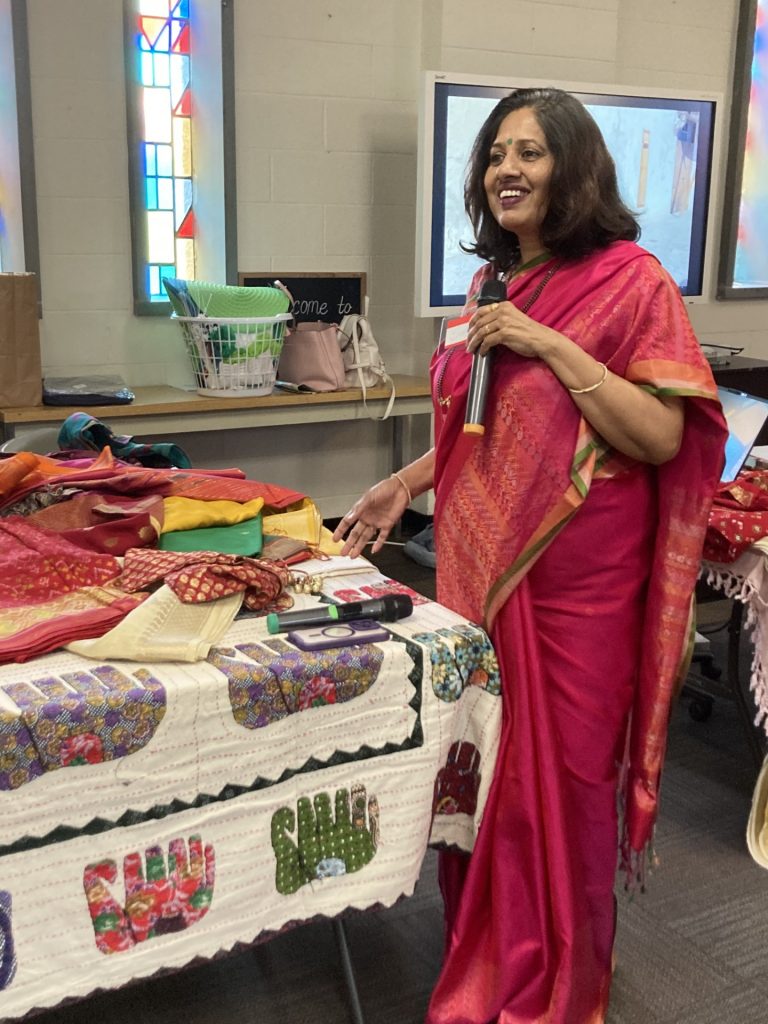
Sarees can be worn at home or office but are regularly seen at festivals, weddings, housewarmings and parties. Women usually begin wearing them when they leave college or are getting ready for marriage. They are often passed down from mother to daughter through generations.
One saree is often 6-9 yards of fabric, plus a yard for the blouse. Blouses come in many styles and are easy to mix and match with a saree. However, in the earliest days a blouse was not worn underneath. A slip is worn under the garment.
The styles differ by regions of the country — reflecting the climate, art, and culture of each geographic area. The huge Indian film industry influences the popularity of different styles of sarees and blouses, Smita said.
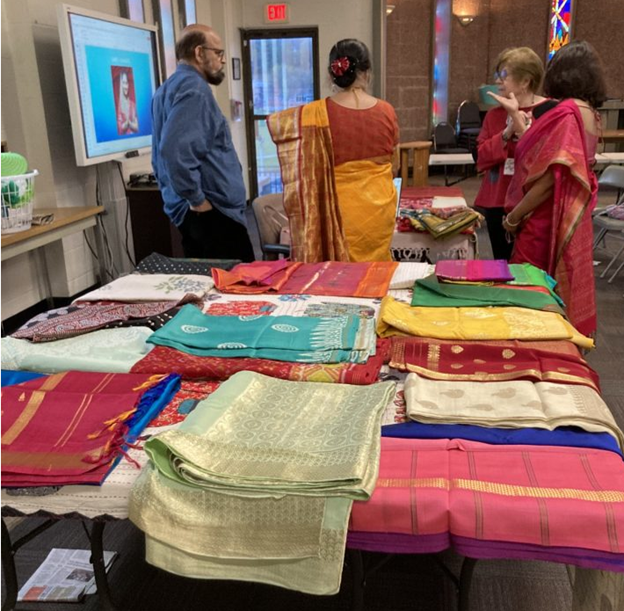
Smita demonstrated how to drape it and where to put the safety pins strategically. Women who wear sarees daily can wrap one in about two minutes. Smita said it takes her about 3 5- minutes — but for those less familiar it can take them awhile.
Wedding sarees are very thick and heavy and usually come in culturally auspicious colors of yellow, red or green. Some have gold or silver threads, but others are made from nylon so even poor people can afford to buy one starting at $3 .