
Lights, special foods and family time together were the common thread linking what three speakers shared at our November 15 meeting. The focus was to learn about fall traditions in various faiths and cultures. We learned about celebrations in India, China and Ukraine.
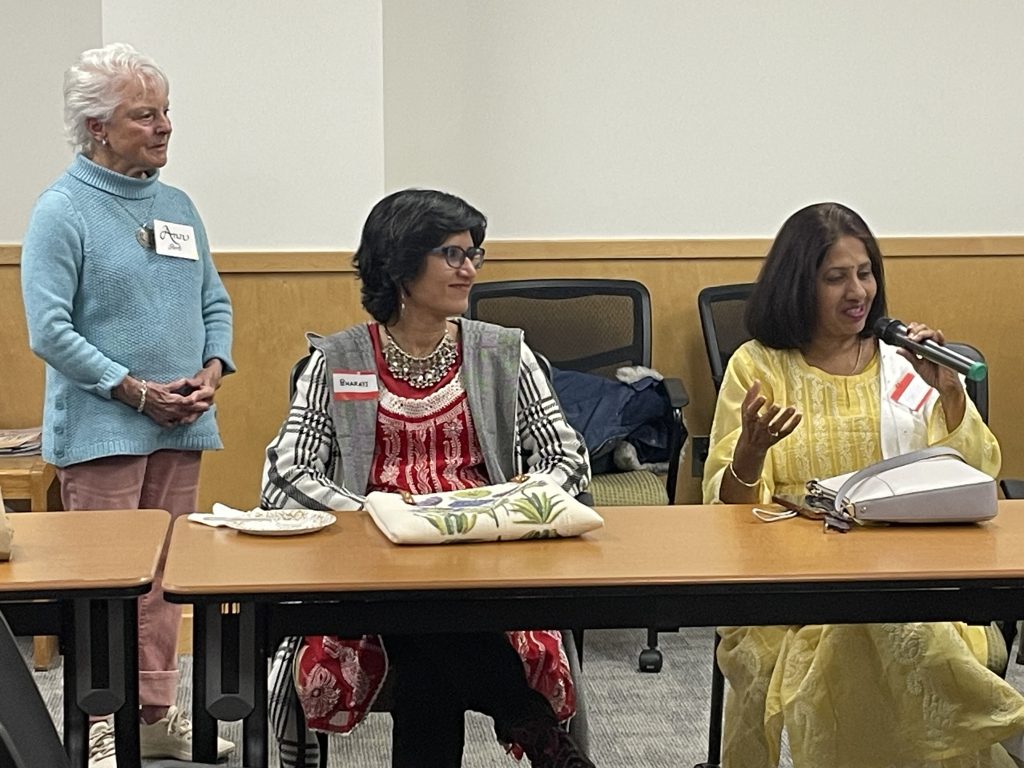
Bharati Mahajan explained the Indian autumn festival of Diwali, a celebration of light over darkness. This holiday is celebrated by Hindus, Jains, Sikhs and Buddhists.
The tradition is to light diyas, shallow clay pots filled with oil, which represent the triumph of light over darkness. Today many families use LED lights. Diwali lasts for 15 days.
Julie Sydorowych told of fall traditions in her native Ukraine. Veles’ Night is October 31- November 1, at which time families light candles and eat a special meal to honor their departed relatives. The Feast day of St. Andrew commemorates the beginning of the Winter Solstice. Traditions include fortune-telling and Family celebrations with Kalyta ring bread being a special treat. Rather than celebrate personal birthdays, Ukrainians celebrate their name-saint’s day.
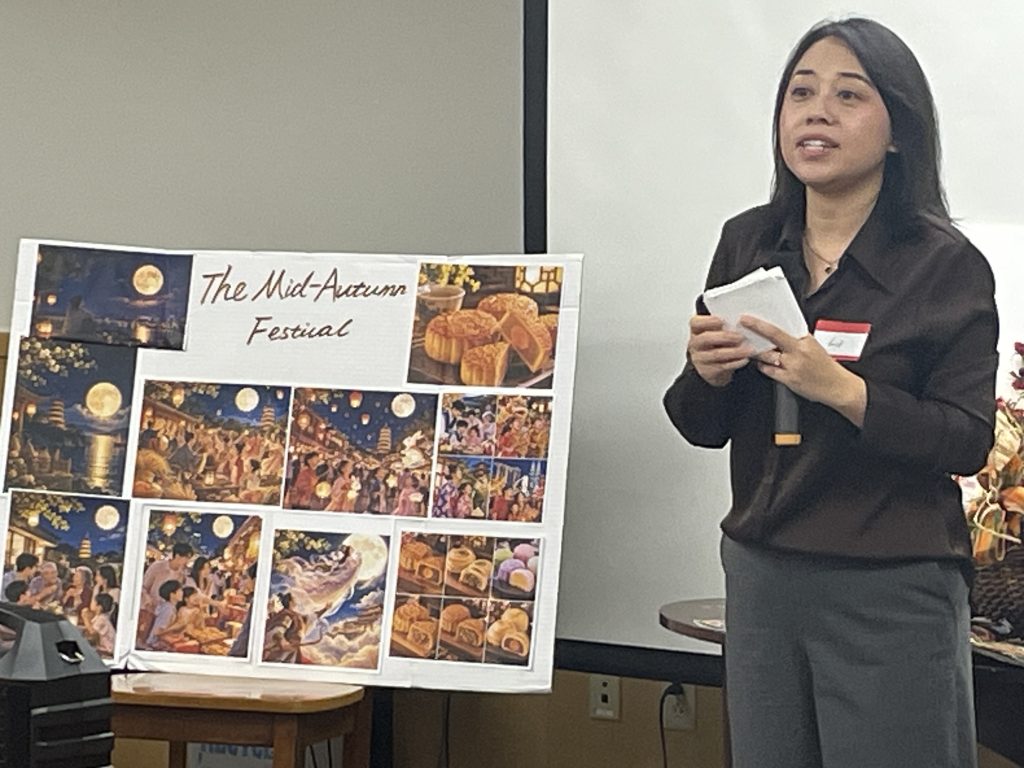
The closest celebration to American Thanksgiving in China is the Mid-Autumn Festival, explained Lee Hua. Families light candles and lanterns and pray to the Moon Goddess for good fortune. Koreans, Japanese, Singaporeans and Malaysians also celebrate this festival. The common holiday food is a mooncake, a sweet dessert made of lotus root paste, with a cooked salted egg yolk inside. People set lanterns afloat on the water, often with riddles or wishes inside. The lanterns are often shaped like a fish or a rabbit.
Lee ended her talk by playing a song with lyrics that read that we all look up at the same moon and thus we are all connected. This is a fitting saying for what WTB has been doing for more than over 25 years — making connections to persons of other faiths and heritages.